


What Is the Best First Flute for a Young Beginner?

Updated: Aug 17
More children are starting flute at five, six or seven years old - much younger than when I first began teaching. This is wonderful, but it also brings one very practical question:
Is the flute actually the right size for the child?
When a young beginner struggles to hold the flute, it is easy to assume the problem is posture or lack of concentration. Sometimes, however, the instrument is simply too big or too heavy for them at this stage.
The best first flute is not necessarily the shiniest or most “grown-up” instrument. It is the one that allows the child to stand comfortably, balance the instrument, move their fingers freely, and enjoy making music.
Why Flute Size Matters
A standard silver flute can be awkward for small children. Their arms may not be long enough to hold it comfortably, their fingers may have to stretch too far, and the weight can cause tension in the shoulders, wrists or hands.
When the flute is too large, children may start to compensate by twisting their head, resting the flute on their shoulder, gripping tightly, or letting the instrument roll inwards. These habits can affect posture, hand position and tone production.
Good posture and good sound are closely connected. If a child is physically uncomfortable, it is much harder for them to develop relaxed hands, free fingers and a beautiful tone.
This does not mean young children should not start flute. It simply means we need to choose the right tool for the job.
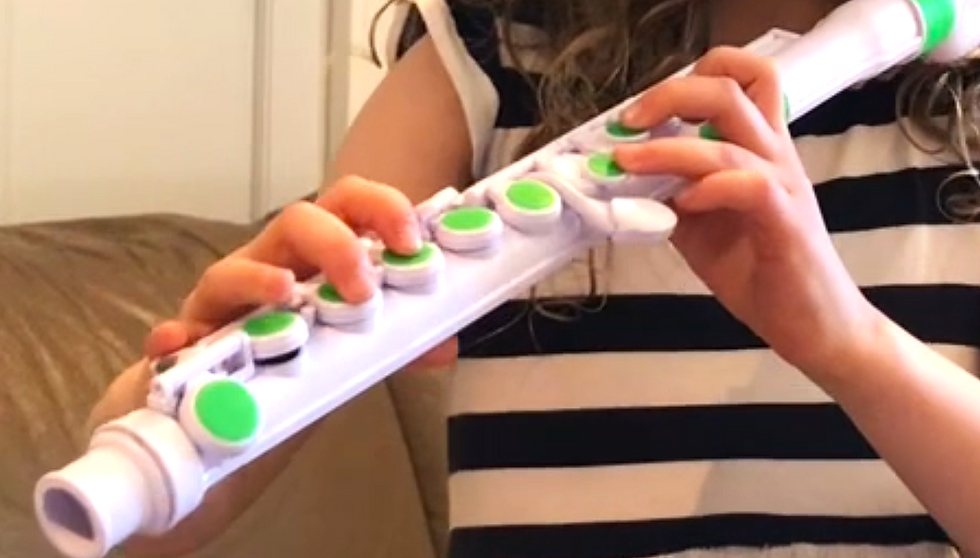
Very Young Beginners: Plastic Flutes, Toots and JFlutes
For very young beginners, especially children around four to six years old, lightweight plastic instruments can be an excellent starting point.
Options such as the Nuvo Toot or JFlute (donut headjoint) can be very helpful because they are light, manageable and designed for small hands. They are both useful, but they suit slightly different stages.
For the very youngest beginners, the Toot can be an excellent first step. When using the Toot, I usually suggest teaching only the natural notes at first, so that the fingerings remain familiar when the child later moves to a JFlute donut head or wave/curved head flute. This keeps the transition as smooth as possible.
The JFlute offers the full chromatic range with standard fingering, so it can work particularly well as a lighter and less expensive alternative to a curved head or wave flute. For some students, this makes it a useful bridge between a very early starter instrument and a standard silver flute.
One of the great advantages of these instruments is the inclusion of a “first notes” style lip plate or mouthpiece, allowing children to play notes immediately while gradually learning the skills needed for a flute embouchure.

This can make an enormous difference in early lessons. Instead of spending the whole first lesson trying to produce a sound, the child can begin making music straight away. Over time, the teacher can introduce the flute-style lip plate or headjoint activities so the student gradually develops the airstream and embouchure skills needed for flute playing.
Plastic instruments are also robust, washable and less worrying for families when used by very young children. They are not a replacement for a silver flute forever, but they can be a very useful stepping stone.
What About Six- to Eight-Year-Olds?
For many children around six to eight years old, the next option may be a modified silver flute, such as a wave flute or curved head flute.

Both reduce the reach required, bringing the keys closer to the body so the child does not have to stretch so far. Curved head flutes can work well, though many children find wave flutes easier to balance. The best choice depends on the individual child, the available instruments, and the family budget.
If a young student is already using a standard flute but finds it a little heavy, one temporary solution is to remove the foot joint in the early stages. The student can rest the right-hand little finger on the end of the flute body until they are ready for the full weight of the instrument.
This is not a long-term solution, but it can help some beginners manage the flute more comfortably while they are learning balance and hand position.
When Is a Standard Flute Suitable?
Many students can manage a standard flute from around nine years of age, although this varies considerably. Height, arm length, hand size, strength and coordination all matter.
A standard flute may be suitable if the student can:
hold the instrument without twisting the neck
keep shoulders and hands relaxed
reach the keys without stretching
balance the flute without gripping tightly
bring the flute to the mouth rather than dropping the head towards it
One worrying trend is young beginners being given flutes with a B foot joint. While a B foot joint may be useful later, young children do not need it in the early stages. It adds extra weight to the flute, which can increase tension in the arms, hands and shoulders. At this stage, comfort, balance and ease of playing are far more important than extra notes they are unlikely to use.
If a standard flute is not yet manageable, it does not mean the child is not ready for flute. It may simply mean they need a smaller or lighter option for now.
Watch for These Warning Signs
Teachers and parents can look for a few common signs that the flute may be too big:
the student rests the flute on the shoulder
the head twists awkwardly toward the left shoulder to reach the lip plate
the right arm looks strained or overextended
fingers flatten or stretch uncomfortably
the flute rolls inwards repeatedly
the child complains that the flute feels heavy
If several of these signs appear, it is worth exploring other instrument options.
“When Will They Get a Proper Flute?”
This is a question I wish we would hear less often.
I once had a young student who was playing a wave flute. She had only recently received her own instrument and was very excited to have a shiny new silver flute that fitted her well. Unfortunately, her band director asked her when she would be getting a “proper” flute.
For the child, this was disheartening. From a teaching perspective, the wave flute was exactly the right instrument for her at that stage. It allowed her to hold the flute comfortably, develop better posture, and enjoy playing without unnecessary strain.

A wave flute, curved head flute, Toot or JFlute is not a lesser instrument if it is the correct option for the child at that moment. For a young beginner, the “proper” flute is the one that allows them to play comfortably and develop good habits.
One of the most discouraging things we can do is imply that a child’s carefully chosen beginner instrument is not real or valid. If it helps them stand well, balance the instrument, move their fingers freely and enjoy learning, then it is doing exactly what it needs to do.
Final Thoughts
Choosing a first flute is not just about price, brand or appearance. It is about fit.
The right instrument gives young beginners the best chance to develop good posture, relaxed hands, secure finger movement and a confident sound. It also helps them feel successful from the beginning.
If you are a parent, please ask your child’s teacher or a reputable flute specialist for guidance before buying. If you are a teacher, please take time to look carefully at the child’s size, comfort and balance before recommending an instrument.
A young beginner does not need the biggest or most impressive flute. They need a flute that fits them well, feels comfortable to hold, and helps them get off to an enjoyable and successful start.
Karen North is a music teacher, mentor and book author. She is passionate about bringing music into the lives of children and adults and has enjoyed working in music education for over 40 years.
Karen is the author of the popular method books "The Young Flute Player" and has commissioned over 100 new works for intermediate flute repertoire in "Lyrical Flute Legends" , "Lyrical Flute Encores" , "Inspiring Flute Solos." and Inspiring Flute Duets as well as an exciting collection of 40 new easy pieces in, "Lyrical Flute Miniatures".
Karen has written two books of music games (with printable templates) "Fun & Games for Music Lessons", "More Fun & Games for Music Lessons 2" and has recently worked with specialist consultants on repertoire books for Violin, Clarinet and Saxophone.
Karen also organizes an international FLUTE CHAMPIONSHIP each year, to give students of all ages and abilities an opportunity to submit a video performance to an outstanding panel of judges. Her workshops for teachers are enthusiastically received and she also offers an online mentor group for flute teachers.


